
Why Recording Decides Whether Your Texas TODD Works
Key Takeaways: If a Texas transfer on death deed isn’t recorded before the owner dies, it generally does not take effect, because Tex. Est. Code § 114.055 says it must be recorded before death in the deed records of the county where the property is located. A deed that was signed and notarized but never filed, filed after death, or filed in the wrong county generally does not pass the property to the named beneficiary. Instead, the property usually becomes part of the probate estate and passes under a will or Texas intestacy law, which may not match what the owner wanted. Revocations and divorce notices generally must also be recorded before death to work, and a will cannot revoke or override a recorded TODD. An agent under a power of attorney cannot create a TODD, and the owner must have the mental capacity needed to make a contract.
If a Texas transfer on death deed (TODD) isn’t recorded before the owner dies, it generally does not take effect. Under Tex. Est. Code § 114.055(1)-(3), a TODD is effective only if it meets the requirements of a properly recordable deed, says the transfer happens at the owner’s death, and is recorded before that death in the deed records of the county clerk’s office where the property sits. A deed that was signed and notarized but left in a drawer generally does not pass the home to the person it names. The property may then go through probate under a will or Texas intestacy law, which is the very result many people use a TODD to avoid.
If you have questions about a deed you signed, or one you found among a relative’s papers, a short conversation can help. Carter Law Wins can walk you through how Texas recording rules may apply to you. You can call 915-400-9467 or reach out to schedule a conversation when you’re ready.
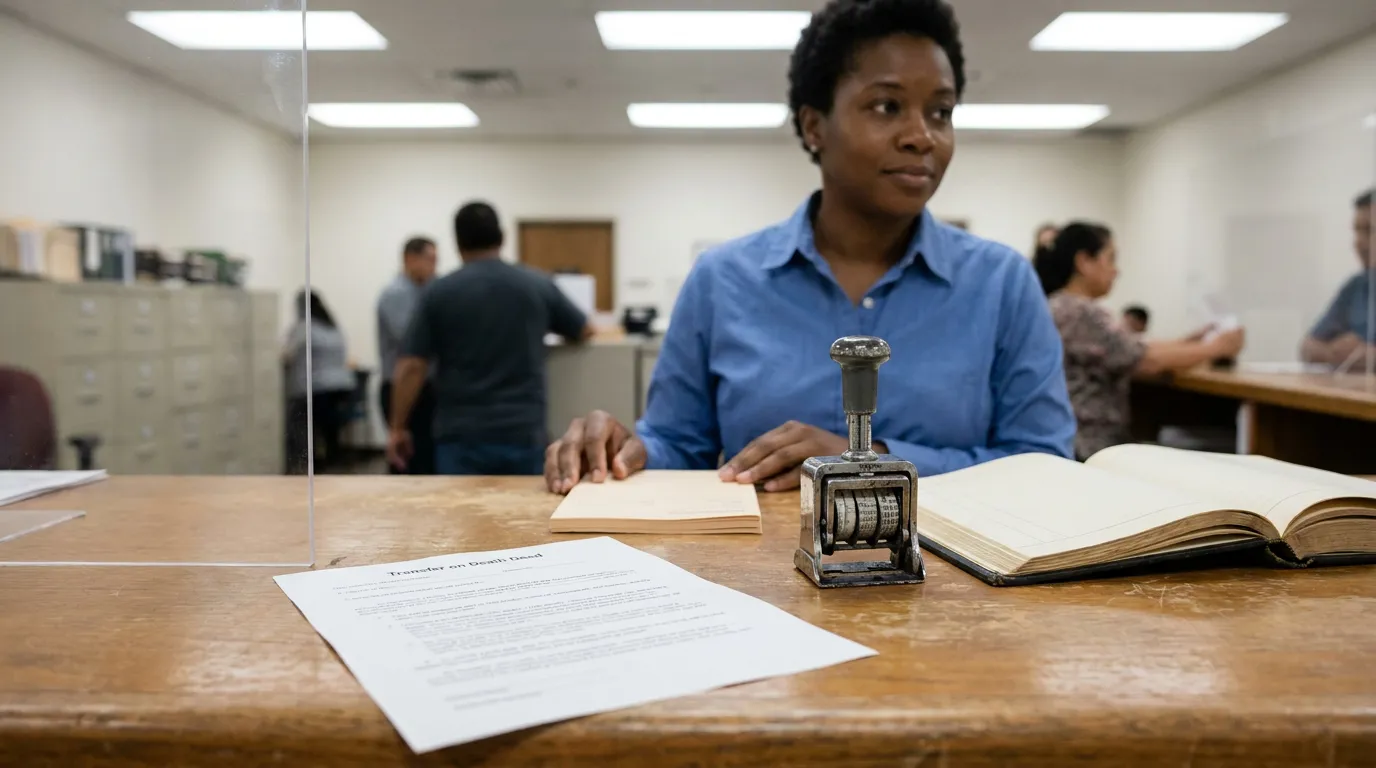
How a Transfer on Death Deed Works in Texas
A TODD lets a Texas property owner name who will receive real estate at death, generally without going through probate for that property. Tex. Est. Code § 114.051 allows a person to transfer an interest in real property to one or more beneficiaries, effective at death. The beneficiary pays nothing for the transfer and has no rights to the property while the owner is alive. After death, the property can still be subject to existing liens and, in some cases, to claims against the estate.
The full set of rules is in Chapter 114 of the Texas Estates Code. You can read the Texas Estates Code TODD provisions on the Texas Legislature’s statute site. Subchapter B, Tex. Est. Code §§ 114.051, 114.057, covers how a TODD is created, signed, recorded, and revoked. All of these requirements apply together.
What the Statute Requires
Tex. Est. Code § 114.055 lists three conditions, and the deed must meet each one. The deed must:
- Contain the essential elements and formalities of a properly recordable deed between living people, such as a signature and acknowledgment
- State that the transfer to the named beneficiary happens at the transferor’s death
- Be recorded before the transferor’s death in the deed records of the county clerk’s office in the county where the property is located
The third condition is where many problems tend to start. The TODD recording requirement makes recording a condition of the deed working, not paperwork you can finish later.
Common Problems With Transfer on Death Deeds Texas Owners Should Know
Most recording problems come from simple oversights, not legal disputes. Often, an owner signs the deed, plans to file it, and then gets sick or forgets. Other times, the owner files in the wrong place. The table below sums up common scenarios.
| Scenario | General Result Under Texas Law |
|---|---|
| TODD signed and recorded in the correct county before death | Generally effective, subject to Tex. Est. Code § 114.103 |
| TODD signed but never recorded | Generally does not transfer the property under Tex. Est. Code § 114.055(3) |
| TODD recorded after the owner’s death | Generally does not meet the recording deadline |
| TODD recorded in the wrong county | Generally does not satisfy § 114.055(3) |
| Revocation signed but not recorded before death | Revocation generally not effective under § 114.057(a) |
Recording in the Wrong County or Too Late
The deed must be recorded in the county where the property sits, not where the owner lives. If an owner lives in El Paso County but owns a rental house in another Texas county, the deed must be recorded with that county’s clerk. A Texas TODD covers only Texas real property, so property in Doña Ana County, New Mexico, falls under New Mexico law.
No Notice or Delivery Required
Tex. Est. Code § 114.056 says the beneficiary does not need to be told about the deed, receive it, or accept it during the owner’s life. This makes TODDs easy to use, but a family may find a signed deed after death with no idea whether anyone filed it. Because the law doesn’t require notice or delivery, the recording deadline is often the main step that decides whether a TODD works.
💡 Pro Tip: After recording, ask the county clerk for a recorded copy showing the filing stamp and instrument number. Keep it with your estate papers so your family can confirm the filing.
What Happens to the Property If the Deed Fails
If a TODD wasn’t recorded in time, the property generally passes as part of the owner’s probate estate. It may then pass under a valid will or, if there is no will, under Texas intestacy rules. That can mean probate for the home, with added time and court involvement.
The outcome can differ sharply from what the owner wanted. If the will names different people than the TODD did, the will generally controls. If there is no will, state law decides who inherits.
Why a Fix After Incapacity Is Difficult
Under Tex. Est. Code § 114.054(a)-(b), the owner must have the same mental capacity needed to make a contract, a standard generally considered higher than the capacity needed to make a will, in order to sign or revoke a TODD. An agent cannot create a TODD under a power of attorney. So if the owner develops dementia or another condition that removes capacity, an agent generally cannot fix a missed deed by signing a new one.
Revocations, Wills, and Divorce Also Depend on Recording
An owner can revoke a TODD at any time, but the revocation has its own recording deadline. Tex. Est. Code § 114.052 says a TODD is revocable even if the deed or another document says otherwise. Under Tex. Est. Code § 114.057(a)(1)-(3), a later TODD or written revocation works only if the owner acknowledges it after acknowledging the original deed and records it before death in the same county where the original was recorded. Destroying a recorded deed does not revoke it.
Under Tex. Est. Code § 114.057(b), a will does not revoke or replace a TODD. Under Tex. Est. Code § 114.057(c), a final divorce judgment revokes the deed as to the former spouse only if notice of the judgment is recorded before the owner’s death in the county where the deed is recorded.
💡 Pro Tip: If you divorce, remarry, or fall out with a named beneficiary, review every recorded deed in each county where you own property, not just your will.
When the Deed Was Recorded Properly
A properly recorded TODD generally transfers the property to beneficiaries who survive the owner by 120 hours. Tex. Est. Code § 114.103 sets several rules that apply after death:
- A beneficiary who does not survive by 120 hours generally loses the share, which passes under the lapse rules of Estates Code Chapter 255
- Multiple beneficiaries generally take equal, undivided shares with no right of survivorship
- If the owner held the property as a joint owner with right of survivorship, the surviving joint owner generally takes it, and the TODD takes effect only when the last joint owner dies
- The deed conveys title without a warranty of title, even if it says otherwise
These rules show why careful drafting and recording go together. Beneficiaries also take the property subject to existing mortgages, liens, and other debts tied to it. Reading about other transfer on death deed problems can help you spot issues before they affect your family.
Frequently Asked Questions
1. Can a family record a TODD after the owner dies?
Generally, no. Tex. Est. Code § 114.055(3) requires recording before the transferor’s death. A deed filed after death generally does not satisfy the statute.
2. Does an unrecorded TODD have any legal value?
An unrecorded TODD generally does not pass the property. It may still show what the owner wanted, but the property generally passes under the will or intestacy law.
3. Can someone with power of attorney sign a TODD for my parent?
No. Tex. Est. Code § 114.054(b) bars creating a TODD through a power of attorney. The owner must sign personally and have the mental capacity needed to make a contract.
4. Does my will cancel a TODD I recorded years ago?
No. Under Tex. Est. Code § 114.057(b), a will does not revoke or replace a TODD. To revoke it, you must record a revocation or new TODD before death in the same county where the original was recorded.
5. Where do I record a TODD for my El Paso home?
Record it in the deed records of the El Paso County Clerk’s office, because § 114.055(3) requires recording in the county where the property is located. For property in other Texas counties, record a deed in each county where a property sits.
Protecting Your Plan Before It’s Too Late to Change
A Texas TODD can be a simple way to pass a home outside probate, but only if it is recorded on time and in the right county. Revocations and divorce notices follow similar recording rules, and the capacity rules in § 114.054 can make mistakes hard to fix later. A probate avoidance Texas home lawyer can review whether your deeds match your wishes.
If you’d like a second look at a deed, a revocation, or a relative’s estate papers, we’re happy to talk it through with you. Carter Law Wins offers clear, direct answers about how Texas law may apply. Call 915-400-9467 or send us a message to start a conversation when it suits you.
Disclaimer: This content is for informational purposes only and is not legal advice. Every case is unique, and results may vary. Consult an attorney about your specific circumstances.