
When a Tired Truck Driver Causes a Crash on I-10
Key Takeaways: An hours of service violation in an El Paso truck crash generally means the driver drove when federal or Texas rules barred him from driving, or the trucking company allowed it. Interstate trucks on I-10 usually fall under FMCSA limits in 49 C.F.R. Part 395, including an 11-hour driving limit after 10 hours off duty, a 14-hour on-duty window, a 30-minute break after 8 total hours of driving, and 60/70-hour weekly limits. Certain exceptions apply. Trucks operating only within Texas may follow looser Texas rules allowing up to 12 hours of driving after eight hours off. Under Tex. Civ. Prac. & Rem. Code Chapter 72, evidence of hours of service violations and out-of-service orders is generally admissible in the first phase of a bifurcated trial against both the driver and the employer. ELD data, logbooks, dispatch records, CVE inspection results, and FMCSA safety databases are often key evidence, and preserving them quickly matters. Proving a violation is generally only part of the case, since injured people must still prove fault, causation, and damages.
In a Texas truck crash case, an hours of service violation generally means the commercial driver was behind the wheel when federal or state rules barred him from driving, or the trucking company let him drive when he should have been off duty. Most trucks on I-10 through El Paso travel between states, so Federal Motor Carrier Safety Administration (FMCSA) limits usually apply. Trucks staying inside Texas may fall under looser Texas rules.
If you have questions about a serious crash, Carter Law Wins can walk you through what the records might show. You can call 915-400-9467 or contact our team, and we can help in English or Spanish.
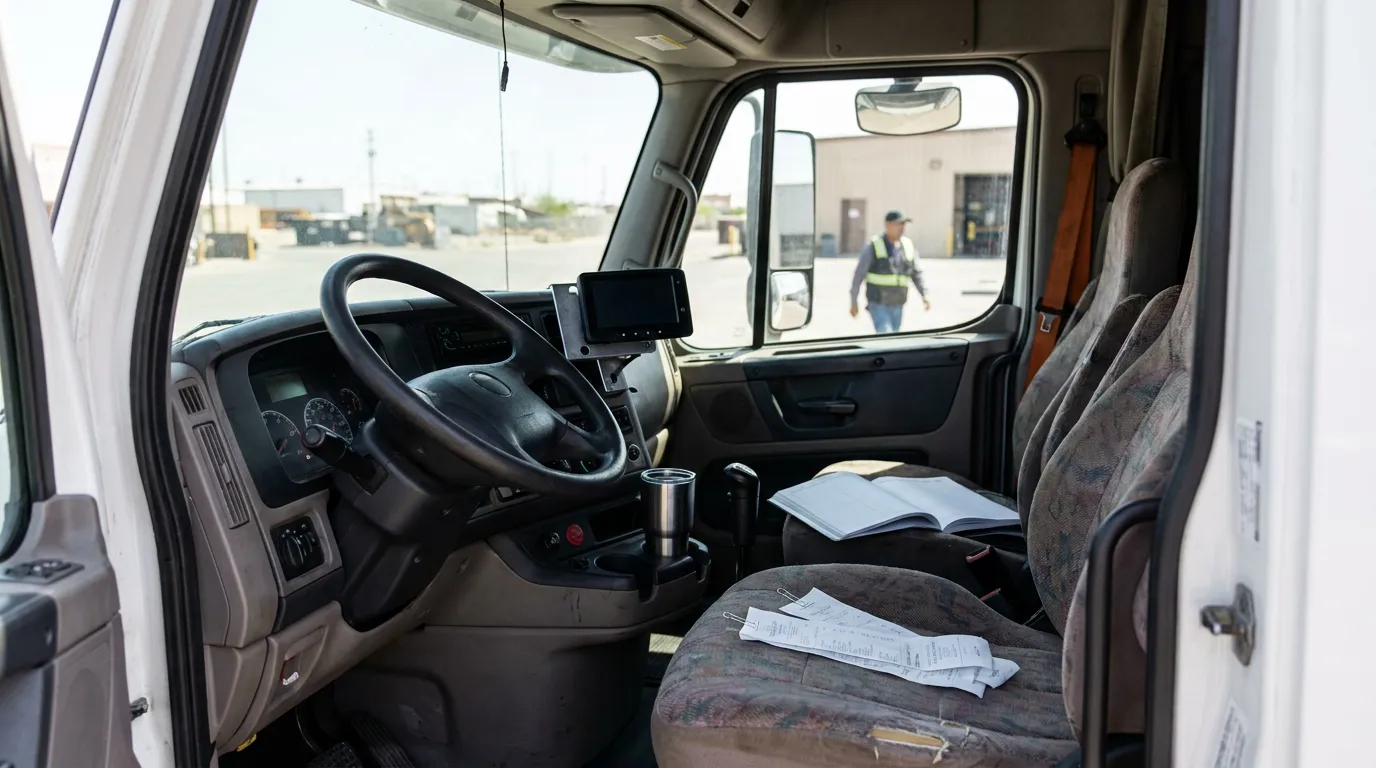
The Hours Limits That Govern Commercial Truck Drivers
Hours of service rules limit how long a commercial driver may drive and stay on duty before he has to rest. The FMCSA sets these rules in 49 C.F.R. Part 395, and they apply to commercial drivers in interstate commerce, subject to exemptions. Texas has largely adopted them for intrastate drivers, with some changes. Tired drivers may react slowly, judge distances poorly, and sometimes fall asleep at the wheel of a vehicle that can weigh 80,000 pounds or more.
Federal Limits for Interstate Trucks
For property-carrying drivers, the main federal limits are an 11-hour driving limit after 10 hours in a row off duty, a 14-hour on-duty window, a 30-minute break after 8 total hours of driving, and a cap of 60 hours in 7 days or 70 hours in 8 days. Exceptions exist, such as extensions for bad driving conditions and short-haul exemptions. Common violations include:
- Driving more than 11 hours
- Driving after the 14-hour on-duty window has closed
- Skipping the required 30-minute break
- Driving while under an out-of-service order, which can be issued under 49 C.F.R. 395.13
- Keeping false logs or logs that don’t match electronic logging device (ELD) data
Most commercial drivers who must keep records of duty status have to record their hours on an ELD under 49 C.F.R. Part 395. Some drivers are exempt, including certain short-haul drivers and trucks with engines older than model year 2000. ELDs create time-stamped records that are much harder to change than paper logbooks, so ELD data may be the strongest evidence of whether a driver went over his limits.
Texas Rules for Intrastate Trucks
Texas has its own hours rules for drivers who never leave the state, and they are generally looser than the federal ones. Under Tex. Transp. Code § 644.051, the Texas Department of Public Safety (DPS) director must adopt safety rules consistent with federal regulations as far as practical. Tex. Transp. Code § 644.053(a)(1) bars a Texas rule from stopping an intrastate driver from driving up to 12 hours after eight hours off in a row. The federal limit is 11 hours. Texas on-duty and weekly limits are in 37 T.A.C. § 4.12.
Some short-haul drivers do not have to keep a full logbook, but time records are still required. Under Tex. Transp. Code § 644.053(a)(3) and (b), drivers who stay within 150 air miles of their normal reporting location, are released within 12 hours, and get at least eight hours off between shifts can be excused from the record of duty status. The motor carrier must still keep time records showing when the driver reported, how long he was on duty, and when he was released.
Some drivers are partly exempt from the Texas limits. Tex. Transp. Code § 644.053 says Texas rules may not set maximum driving and on-duty times during planting or harvest season for certain intrastate drivers hauling farm products within 150 air miles of the source. It also applies Texas hours and logbook rules to certain household goods carriers on trips beyond a 150-mile radius. You can read these provisions in Texas Transportation Code Chapter 644.
Interstate or Intrastate: Why It Matters in an El Paso Truck Crash
Whether federal or Texas rules apply often depends on whether the truck was crossing state lines or carrying freight that was part of an interstate shipment. Under Tex. Transp. Code § 644.002, a federal motor carrier safety rule generally overrides a conflicting Texas provision for interstate trucks. For trucks operating only inside Texas, a rule adopted by the DPS director generally overrides a conflicting federal rule.
| Factor | Interstate Truck (e.g., I-10 to New Mexico) | Intrastate Truck (Texas only) |
|---|---|---|
| Main rules | FMCSA, 49 C.F.R. 395.3 and 395.5 | 37 T.A.C. § 4.12 |
| Driving limit | 11 hours | Up to 12 hours after 8 hours off |
| Which rule wins if they conflict | Federal | Texas DPS rule |
El Paso is a border city on a major freight corridor, so many trucks here are on interstate or cross-border trips. A local delivery truck working only in El Paso County might fall under Texas rules, unless its cargo is part of a longer interstate shipment.
💡 Pro Tip: Write down anything you remember about the truck, such as the company name, the USDOT number, or trailer markings. These details can help identify the carrier and its safety history.
How Hours of Service Violations Truck Crash Evidence Is Used in Texas Courts
Texas law specifically names hours of service violations as evidence that may be used against both the driver and the trucking company in the first phase of a bifurcated trial. Texas passed House Bill 19 in 2021, which changed how commercial truck crash trials work. These rules are in Texas Civil Practice and Remedies Code Chapter 72.
The Two-Phase Trial
Under Tex. Civ. Prac. & Rem. Code § 72.052, the court must split a commercial truck crash trial into two phases if a defendant files a timely motion. The first phase decides liability and compensatory damages. The second phase decides exemplary (punitive) damages, and it generally happens only if the first phase supports that claim.
Evidence Allowed in the First Phase
Hours of service evidence is one of the items the statute expressly allows in the first phase. Under Tex. Civ. Prac. & Rem. Code § 72.054(c), when the carrier is regulated by the Motor Carrier Safety Improvement Act of 1999 or Tex. Transp. Code Chapter 644, a party may show:
- Whether the driver was driving when 49 C.F.R. 395.3 or 395.5, or 37 T.A.C. § 4.12, barred him from driving on the day of the crash
- Whether the employer let the driver operate the truck that day in violation of those same rules
Out-of-service orders are also allowed in the first phase. Under § 72.054(c), and see Tex. Transp. Code § 522.003, a party may show whether the driver or employer was subject to an out-of-service order when the crash happened.
When Other Violations Can Come In
Other regulatory violations generally have to be tied to how the crash happened. Under Tex. Civ. Prac. & Rem. Code § 72.053, evidence of a violation not listed in § 72.054(c) is generally allowed in the first phase only if it tends to show the violation was a proximate cause of the injury or death, and the rule is specific and governs the defendant, its employee, or its equipment. Injured people may still seek exemplary damages under Chapter 41 based on other violations and present that evidence in the second phase.
Who Investigates and What Records Matter
Texas DPS Commercial Vehicle Enforcement (CVE) troopers enforce state and federal trucking rules, including hours of service limits, across Texas and the El Paso region. They inspect vehicles, check driver compliance, and review logs and ELD data. If they find a violation, they can issue a citation or place the driver out of service. A citation can help document a violation, but it does not alone prove civil liability.
FMCSA databases can also reveal a carrier’s history. The Safety and Fitness Electronic Records (SAFER) system and Compliance, Safety, Accountability (CSA) data track inspection and violation history, including hours of service problems. Some CSA data is not public, and it is not a formal safety rating. A pattern of past violations may help show that a company tolerated driver fatigue.
💡 Pro Tip: ELD data, dispatch records, fuel receipts, and toll records can be lost or overwritten over time. A written preservation letter sent to the carrier soon after a crash can help protect that evidence.
Building a Truck Accident Claim Around Driver Fatigue
Proving a violation is often only part of the case, because the evidence usually has to connect fatigue to the crash. Investigators may compare ELD logs with GPS data, delivery schedules, and receipts to rebuild the driver’s day. Signs such as drifting out of the lane or not braking can support a fatigue theory.
Trucking companies and their insurers often argue that the driver’s hours had nothing to do with the crash. They may also claim the injured person was partly at fault. Under Texas’s proportionate responsibility rules, that can lower your recovery, or bar it if you are found more than 50% responsible. A Texas truck accident lawyer can look at whether the records support those defenses. Results always depend on the specific facts and evidence.
If you have headaches, memory problems, mood changes, or trouble sleeping after a crash, those symptoms deserve attention. A traumatic brain injury can come from the violent jolt of a collision even when your head didn’t hit anything. A medical evaluation matters for your health and for documenting your claim.
Frequently Asked Questions
1. What counts as an hours of service violation in an El Paso truck crash?
In general, it means the driver drove when 49 C.F.R. 395.3 or 395.5, or 37 T.A.C. § 4.12, barred him from driving, or the employer allowed him to. Tex. Civ. Prac. & Rem. Code § 72.054(c) generally makes this evidence admissible in the first phase of a bifurcated trial.
2. Do federal or Texas rules apply to my crash?
It usually depends on the trip and the cargo. Under Tex. Transp. Code § 644.002, federal rules generally control for interstate trucks and Texas DPS rules generally control for intrastate trucks.
3. Can the trucking company be held responsible, not just the driver?
It may be. Tex. Civ. Prac. & Rem. Code § 72.054(c) allows evidence that the employer let the driver operate in violation of the hours rules. The company may also be liable for its driver’s negligence on the job.
4. Does a violation automatically mean I win my case?
No. The listed hours violations can come in during the first phase, but the case still depends on proving fault, causation, and damages.
5. What evidence proves a driver went over his hours?
ELD records, logbooks, short-haul time records, dispatch data, and CVE inspection results are common sources. FMCSA’s SAFER and CSA data can show the carrier’s history.
Putting the Hours Rules in Perspective
Hours of service violations truck crash cases often turn on records, timing, and which set of rules applied to the truck. Federal limits generally govern interstate trucks on I-10, Texas rules may govern trucks that stay inside the state, and some drivers are exempt. You can find more answers on our El Paso truck crash resources page.
When you’re ready to talk about what happened, Carter Law Wins is here to listen and explain your options clearly. Call 915-400-9467 or reach out to schedule a conversation. Spanish-language support is available.
Disclaimer: This content is for informational purposes only and is not legal advice. Every case is unique, and results may vary. Consult an attorney about your specific circumstances.