
Crossing the State Line Can Change Your Injury Claim
Key Takeaways: New Mexico uses a pure comparative negligence rule, so an injured person can usually still recover damages even if mostly at fault, though the award is cut by their share of blame. Texas uses a modified system with a 51 percent bar, so a claimant found more than 50 percent responsible generally recovers nothing. New Mexico has largely abolished joint and several liability, but it still applies in some cases, such as when a trucking company is vicariously liable for its driver. Fault in New Mexico is compared among everyone involved, including people who were never sued, and settlement wording can affect claims against other parties. New Mexico generally allows three years to file an injury lawsuit, compared with two in Texas. Claims against New Mexico government entities have a separate two-year deadline and a short written notice requirement.
New Mexico and Texas handle shared fault very differently, and that difference can affect your recovery after a serious I-10 crash. Under New Mexico comparative negligence rules, an injured person can generally recover damages even when mostly at fault, though the award is reduced by their share of blame. Under Tex. Civ. Prac. & Rem. Code § 33.001, a Texas claimant found more than 50 percent responsible recovers nothing. For anyone hurt between El Paso and Las Cruces, the state whose law the court applies can matter as much as the facts.
If you or someone in your family was seriously hurt on I-10 and you aren’t sure how fault will be decided, Carter Law Wins can explain how these rules may apply to you. You can call 915-400-9467 or reach out to our team online for a confidential conversation in English or Spanish.
Why I-10 Crashes Can Involve Two States’ Laws
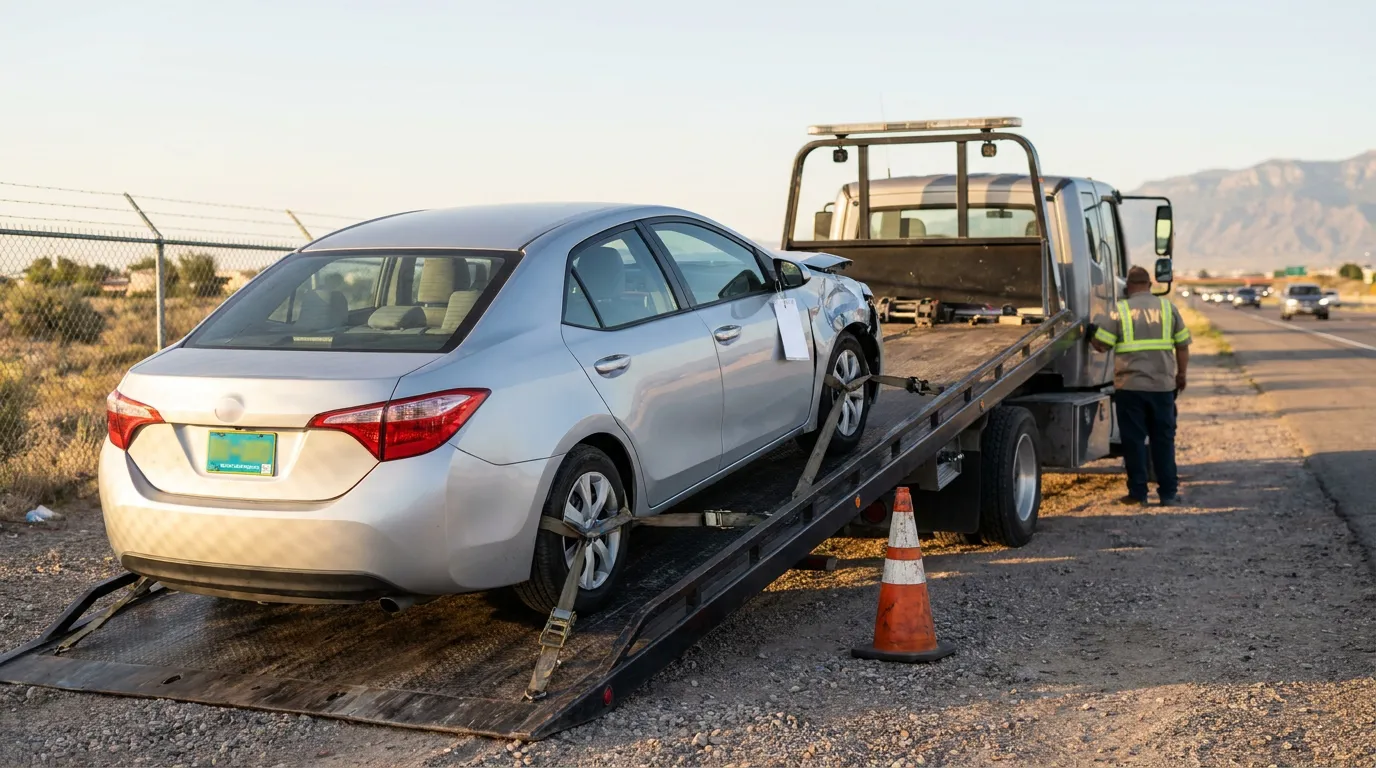
I-10 carries heavy freight and commuter traffic between El Paso and Las Cruces, and a short drive can cross a state line. A crash a few miles past the line may fall under different rules than one inside El Paso County.
That overlap raises an early question: which state’s law applies? New Mexico courts have traditionally applied the law of the place where the injury occurred, though they may refuse to apply another state’s law if it violates New Mexico public policy. Texas courts generally use a "most significant relationship" test that looks at contacts such as where the injury and conduct occurred and where the parties live.
How New Mexico Comparative Negligence Works
New Mexico follows a "pure" comparative negligence rule, adopted by the New Mexico Supreme Court in Scott v. Rizzo, 1981-NMSC-021, 96 N.M. 682. Your own share of fault reduces your recovery, but no fixed percentage cuts it off completely. A New Mexico Law Review analysis traces how this rule shaped fault allocation across the state. For example, a person found 70 percent at fault may still recover 30 percent of their proven damages.
Fault Is Measured Against Everyone Involved
Under NMSA 1978 § 41-3A-1(B), a severally liable defendant who proves someone else’s fault contributed to the injury generally pays only the share of damages matching its own fault compared with the total fault of all persons. That total includes the plaintiff, the defendants, and non-parties. In multi-vehicle I-10 collisions, a driver who left the scene or was never sued may still be assigned a percentage of blame, reducing what the named defendants owe.
Joint and Several Liability Is Largely Abolished
NMSA 1978 § 41-3A-1(A) abolishes joint and several liability in most cases where comparative fault applies, so each defendant’s liability is generally "several." Each at-fault party usually pays only its own share instead of covering for others who can’t pay. A severally liable defendant also generally cannot reduce its share by amounts the victim recovered from someone else.
Exceptions That Matter in Trucking and Commercial Crashes
Joint and several liability still applies in certain situations under NMSA 1978 § 41-3A-1(C)(1)-(4). These include:
- Persons who acted with intent to injure
- Persons in a vicarious liability relationship, such as an employer whose driver caused the crash
- Persons strictly liable for a defective product, such as a faulty brake part
- Situations that courts find have "a sound basis in public policy"
The vicarious liability exception often comes up in 18-wheeler and delivery vehicle cases on I-10. If a trucking company is responsible for its driver’s conduct, the company and driver are jointly and severally liable for the share of fault assigned to them, but not for the shares of unrelated parties. Whether the exception applies depends on the employment relationship and other facts that usually require investigation.
💡 Pro Tip: In commercial vehicle cases, the motor carrier listed on the truck’s door or in federal records may not be the company that employed the driver. Writing down every name, number, and logo you see at the scene can help identify everyone who may share fault.
New Mexico vs Texas Comparative Fault at a Glance
The table below sums up key differences for injured people. It is a general overview, and exceptions in both states can change the result in a specific case.
| Issue | New Mexico | Texas |
|---|---|---|
| Fault system | Pure comparative negligence (Scott v. Rizzo) | Modified comparative negligence, 51 percent bar (Tex. Civ. Prac. & Rem. Code § 33.001) |
| Plaintiff mostly at fault | May still recover a reduced award | Recovers nothing if more than 50% responsible |
| Joint and several liability | Largely abolished, with exceptions (NMSA § 41-3A-1) | Generally applies only to a defendant more than 50% responsible, plus certain criminal conduct (Tex. Civ. Prac. & Rem. Code § 33.013) |
| Injury lawsuit deadline | Three years (NMSA § 37-1-8) | Two years (Tex. Civ. Prac. & Rem. Code § 16.003) |
Why the 51 Percent Bar Rule in Texas Changes Insurer Tactics
Under Texas’s modified comparative negligence rule, a single percentage point can decide whether a claim is worth anything. That gives insurers a strong reason to blame the injured person by claiming speeding, distraction, or an unsafe lane change. In New Mexico, shifting blame still lowers recovery but doesn’t wipe out the claim. In either state, an insurer’s early fault estimate is only a negotiating position, not a legal finding.
How Contribution Affects a Shared Fault Injury Claim
New Mexico’s Uniform Contribution Among Tortfeasors Act lets a liable party seek contribution from others who share liability, though contribution matters less now that several liability is the general rule. Under NMSA 1978 § 41-3-1, "joint tortfeasors" are two or more persons jointly or severally liable in tort for the same injury. In fatal crashes, wrongful death claims under NMSA § 41-2-1 follow the same fault rules.
Why Settlement Wording Matters
Under NMSA 1978 § 41-3-2, a joint tortfeasor generally cannot get contribution until it has paid more than its pro rata share, and a tortfeasor who settles generally cannot seek contribution from a party whose liability the settlement did not end. NMSA 1978 § 41-3-5 adds that releasing one tortfeasor does not free that party from contribution liability unless the release comes before the right of contribution arises and reduces the victim’s recoverable damages by the released party’s share. Settling with one driver in a multi-vehicle crash can therefore affect claims against everyone else. Have release language carefully reviewed before you sign anything.
Deadlines and Insurance Rules on the New Mexico Side
Under NMSA 1978 § 37-1-8, New Mexico generally allows three years to file a personal injury lawsuit from a car accident. Texas generally allows two. Limited exceptions may extend these deadlines, but courts read them narrowly.
Claims involving a New Mexico government entity or public employee follow a separate deadline under NMSA 1978 § 41-4-15(A). These claims are generally barred unless filed within two years of the incident. A child under seven generally has until their ninth birthday. Under NMSA 1978 § 41-4-16, you usually must also give written notice within 90 days unless the government entity had actual notice.
New Mexico requires minimum liability coverage of 25/50/10 under NMSA 1978 § 66-5-201 et seq. That means $25,000 per person and $50,000 per crash for bodily injury, plus $10,000 for property damage. Those limits often fall far short of the cost of a serious injury, so identifying every responsible party, including commercial carriers, can matter a great deal.
💡 Pro Tip: Memory gaps, irritability, headaches, or trouble sleeping in the weeks after a crash can signal a brain injury, even without a direct blow to the head. Reporting them to a doctor creates a record that may matter later in a fault dispute.
Protecting Your Interstate Car Accident Claim
Building an interstate car accident claim starts with saving evidence before it disappears. Truck data recorders, dashcam footage, and driver logs may be erased over time. A written request asking the carrier to keep this evidence can help protect it. You can find more guidance on cross-border accident claim issues in our other articles.
Be careful about giving recorded statements to the other driver’s insurer. Casual comments about your speed or what you were looking at could later be used to assign you a share of fault. Speaking with a New Mexico comparative negligence lawyer before giving a statement may help you understand what is at stake.
Frequently Asked Questions
1. Can I recover in New Mexico if I was mostly at fault?
Generally, yes, if New Mexico law applies. Under the pure comparative negligence rule adopted in Scott v. Rizzo, your damages are reduced by your percentage of fault.
2. Which state’s law applies to my I-10 crash?
New Mexico courts have traditionally applied the law of the place of injury, while Texas courts generally weigh several contacts. Where the crash happened, where suit is filed, and where the parties live can all affect the answer.
3. Can a driver who wasn’t sued be assigned fault?
Generally, yes. Under NMSA 1978 § 41-3A-1(B), fault is compared among all persons, including non-parties, which can reduce the share the named defendants owe.
4. Is a trucking company responsible for its driver’s share?
In many cases, yes. NMSA 1978 § 41-3A-1(C)(2) keeps joint and several liability for persons in a vicarious liability relationship, which can include employers. That liability covers only the share of fault assigned to the driver and company together.
5. How long do I have to file in New Mexico?
Generally three years under NMSA 1978 § 37-1-8. Claims against government entities generally have a two-year deadline under NMSA 1978 § 41-4-15(A), and written notice is usually required within 90 days.
Moving Forward After an I-10 Collision
The state line along I-10 can change how fault is divided, how long you have to file, and who may be responsible for your losses. New Mexico rules generally allow a reduced recovery even when you share significant blame, while Texas’s 51 percent bar can end a claim entirely. Each case turns on its own facts.
If you’d like help understanding how these rules may apply to you, Carter Law Wins is available for a calm, straightforward conversation. Call 915-400-9467 or schedule a confidential consultation whenever you’re ready. Hablamos español.
Disclaimer: This content is for informational purposes only and is not legal advice. Every case is unique, and results may vary. Consult an attorney about your specific circumstances.