
When the Other Driver Has No Insurance, Your Policy Matters Most
Key Takeaways: When an uninsured driver hits you in Texas, your own auto policy often pays your medical bills, because the at-fault driver has no liability insurer and rarely has enough money to pay a judgment. The main sources of payment are usually uninsured motorist (UM/UIM) coverage, Personal Injury Protection (PIP), and your health insurance. Texas law requires every auto liability policy to include UM/UIM and PIP unless a named insured rejected them in writing. PIP generally pays medical bills, lost income, and essential services no matter who caused the crash. UM/UIM may cover the damages you could have recovered from the at-fault driver. These coverages have limits, including per-person caps, a three-year window for PIP expenses, and a rule that a hit-and-run vehicle must have actually touched you or your property.
In many cases, your own auto policy may pay your medical bills when an uninsured driver hits you in Texas. Texas is a fault-based state, so the at-fault driver’s liability insurance would normally cover your losses. When that driver has no insurance, that source is gone, and few uninsured drivers can pay a judgment themselves. The main paths to recovery are uninsured motorist coverage, Personal Injury Protection (PIP), and health insurance. Which applies depends on what your policy includes and whether a named insured rejected coverage in writing.
If you were hurt in a crash and the other driver had no insurance, it helps to know your options before you speak with an insurance adjuster. The team at Carter Law Wins can review your policy and explain where you stand. You can call 915-400-9467 or schedule a conversation with our team whenever you are ready.
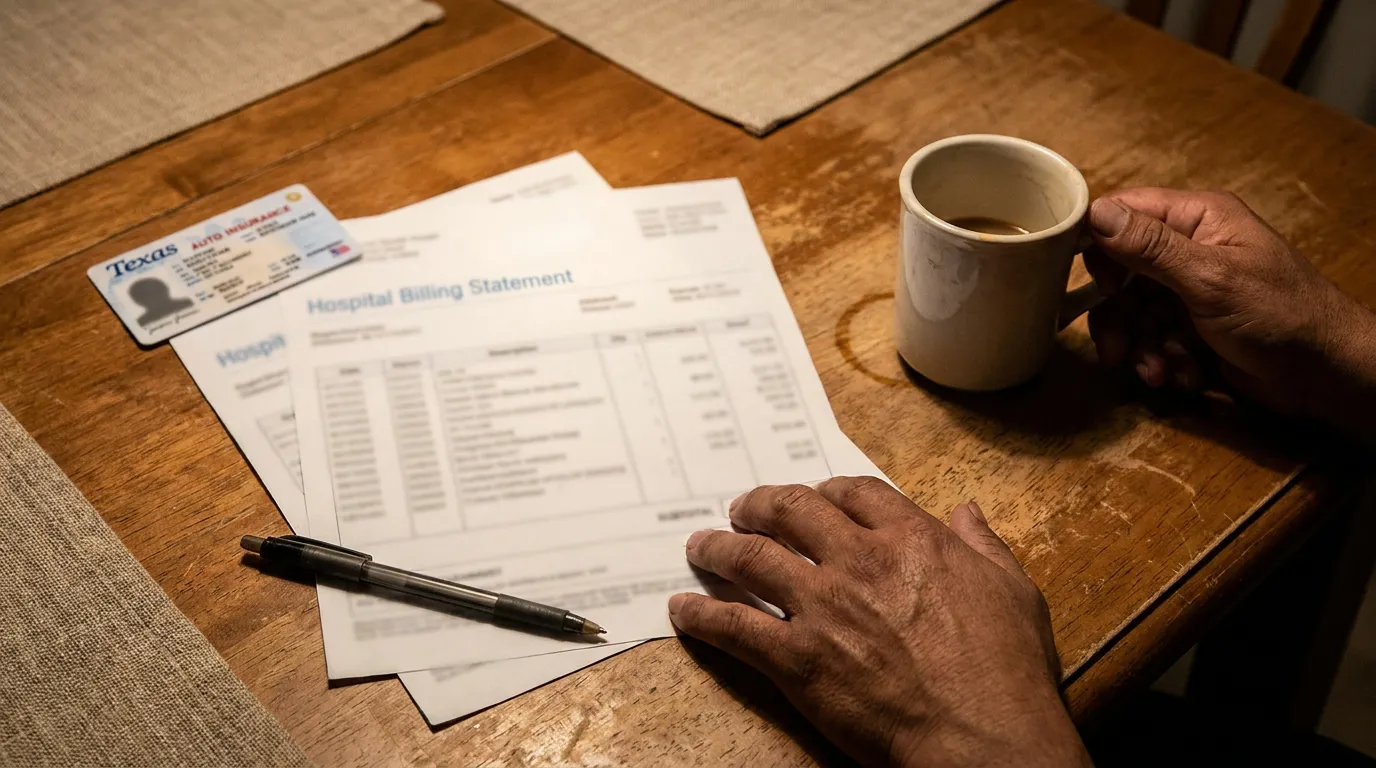
Why Texas’s Fault System Leaves Gaps After an Uninsured Driver Accident
Texas uses a fault-based insurance system, so the driver who causes a crash is generally responsible for the damages. Under the Texas Motor Vehicle Safety Responsibility Act, Transportation Code Chapter 601, drivers must show financial responsibility. For most drivers, that means liability insurance of at least 30/60/25: $30,000 per injured person, $60,000 per accident for bodily injury, and $25,000 for property damage. You can read the Texas minimum liability requirements in the statute itself.
The system only works when drivers follow it. After an uninsured driver accident, you may have a valid negligence claim against someone with no insurer and few personal assets. A judgment against that driver may be hard to collect. That gap is why the coverage on your own policy often decides whether your medical bills get paid.
What Happens to Many People in El Paso After These Crashes
Many injured people first learn about their coverage gaps after the bills start arriving. On busy routes like I-10 through El Paso and toward Las Cruces, a serious crash can mean an ambulance ride, imaging, and weeks of follow-up care. If you or a family member is more comfortable discussing insurance in Spanish, bring that person into these talks early.
How Uninsured Motorist Coverage in Texas Works
Uninsured motorist coverage in Texas may pay for your injuries when the at-fault driver has no insurance or not enough to cover your losses. Under Texas Insurance Code § 1952.101(a)-(b), an insurer may not issue an auto liability policy in Texas unless UM/UIM coverage is included or added. The coverage must meet at least the minimum limits in Transportation Code Chapter 601. It protects insured people who are legally entitled to recover damages from the owner or driver of an uninsured or underinsured vehicle for bodily injury, sickness, disease, or death, or for property damage.
The written rejection rule is the most important exception. Under Texas Insurance Code § 1952.101(c), UM/UIM coverage does not apply if any named insured rejected it in writing. After a rejection, the insurer does not have to offer the coverage again at renewal or reinstatement unless a named insured asks for it in writing. You can review the full text of Texas Insurance Code Chapter 1952, which governs UM/UIM and PIP coverage.
💡 Pro Tip: Ask your insurer for a certified copy of your complete policy, including any signed rejection forms. People sometimes sign a rejection while buying a policy and forget it years later.
Uninsured vs. Underinsured Vehicles
Texas law defines both terms, and the definitions are broader than many people expect. Under Texas Insurance Code § 1952.102, and subject to the policy terms, an "uninsured motor vehicle" can include an insured vehicle whose liability insurer cannot pay, in whole or in part, because it is insolvent. Under § 1952.103, an "underinsured motor vehicle" is an insured vehicle whose liability limits were lower than your UIM limits from the start, or fell below them after paying other claims from the same accident.
How Underinsured Payments Are Calculated
UIM coverage generally adds to the at-fault driver’s insurance. Under Texas Insurance Code § 1952.106, UIM coverage pays what you are legally entitled to recover from the underinsured driver for bodily injury or property damage, up to your policy limit. The insurer subtracts the amount recovered or recoverable from the at-fault driver’s liability insurer.
Statutory Limits That Can Affect Your UM Claim
Texas law sets certain limits on UM/UIM coverage, and knowing them early helps you avoid surprises. Under Texas Insurance Code § 1952.104(1)-(3), a policy must:
- Cap what one person can recover for one occurrence at the stated policy limit, no matter how many vehicles, policies, or claims are involved
- Exclude damages caused by the insured’s own intentional acts
- Require that, in a hit-and-run where the other driver is unknown, the unknown vehicle actually touched the insured person or the insured’s property for UM coverage to pay
Pay close attention to the contact rule in hit-and-run cases. If a driver forced you off the road without touching your vehicle, UM coverage may not apply. Evidence of contact, such as photos of paint transfer, damage patterns, and witness statements, can be key. Keep your damaged vehicle or take detailed photos before repairs start.
PIP: Coverage That Can Pay Medical Bills Regardless of Fault
Personal Injury Protection is often the fastest source of money for medical bills after a crash. Under Texas Insurance Code § 1952.152(a)-(b), insurers must include PIP in every Texas auto liability policy unless a named insured rejects it in writing. As with UM coverage, a rejection carries over to renewals unless a named insured asks for the coverage in writing.
PIP covers a wide range of expenses, up to your policy limits. Under Texas Insurance Code § 1952.151, PIP pays reasonable expenses you incur within three years of the accident date. That includes necessary medical, surgical, x-ray, dental, ambulance, hospital, nursing, and funeral services. It also covers lost income for wage earners and reasonable costs for essential household services for injured people who were not earning income. Coverage generally extends to the named insured, household members, and authorized drivers or passengers, subject to the policy terms and exclusions.
| Coverage Source | Fault Required? | What It Generally Covers | Key Limitation |
|---|---|---|---|
| PIP (§ 1952.151) | No | Medical expenses, lost income, essential services | Policy limit; 3-year expense window |
| UM/UIM (§§ 1952.101,.106) | Yes, other driver at fault | Damages you could legally recover from the at-fault driver | Written rejection; per-person cap; contact rule for hit-and-run |
| Health Insurance | No | Medical treatment under plan terms | Deductibles, networks, possible repayment claims |
Protecting Your Claim Against Your Own Insurer
You file a UM claim with your own insurance company, but that does not put the insurer on your side. In a UM claim, your insurer may look at fault, causation, and the value of your injuries much as the other driver’s insurer would. Adjusters may ask for recorded statements or broad medical authorizations early on. Your policy may require you to cooperate with reasonable requests, but you can generally ask for questions in writing and take time to understand your policy before you answer.
Good records tend to strengthen your position. Keep every medical record, bill, and work note. Write down symptoms as they appear, because some injuries show up slowly. Headaches, memory lapses, trouble sleeping, or mood changes can be signs of a traumatic brain injury. Telling your doctor about these changes creates a record that may help connect them to the crash.
💡 Pro Tip: Get a copy of the police report and confirm that it notes the other driver had no insurance. That detail can support your UM claim from the start.
Time limits also matter. The general two-year deadline for personal injury suits in Texas appears in Civil Practice and Remedies Code § 16.003. UM claims against your own insurer are usually contract claims, so they can involve different deadlines and policy notice rules.
Frequently Asked Questions
1. Do I have UM coverage if I never asked for it?
Possibly. Texas Insurance Code § 1952.101 requires UM/UIM coverage in auto liability policies unless a named insured rejects it in writing. If no named insured signed a written rejection, the coverage is generally part of your policy.
2. Can I use PIP and UM coverage for the same accident?
In many cases, yes, but your policy terms control how the two work together, and the same expense generally cannot be paid twice.
3. What if a hit-and-run driver caused my crash?
UM coverage may apply, but under Texas Insurance Code § 1952.104(3), the unknown vehicle must have actually touched you or your property. Photos and witness accounts can help show that contact.
4. What if the at-fault driver’s insurance company went bankrupt?
Under Texas Insurance Code § 1952.102, and subject to your policy terms, a vehicle whose liability insurer is insolvent and unable to pay may count as uninsured. Your UM coverage could then apply.
5. Should I sue the uninsured driver directly?
You may have that right, but collecting a judgment can be hard. Whether a lawsuit makes sense depends on your coverage, your injuries, and the driver’s situation.
Making Sense of Your Options After an Uninsured Driver Hits You
When an uninsured driver injures you in Texas, your own coverage often decides how your medical bills get paid. Uninsured motorist coverage in Texas, PIP, and health insurance each play a different role, and each has limits set by statute and by your policy. You can find more guidance on what to do after an uninsured driver accident in our other articles.
If you have questions about your policy or an insurer’s response, a calm review of the facts is a good place to start. An uninsured motorist coverage Texas lawyer at Carter Law Wins can go over your coverage and explain your options in plain language, in English or with your Spanish-speaking family members included. Reach us at 915-400-9467, or contact our office online to start that conversation.
Disclaimer: This content is for informational purposes only and is not legal advice. Every case is unique, and results may vary. Consult an attorney about your specific circumstances.