
How Fast Action Protects Your Case After a Commercial Truck Collision
Key Takeaways: Evidence must be saved quickly after an El Paso truck crash because the important records, like driver logs, drug-testing results, hiring files, and electronic data, are held by the trucking company and may not be kept forever, while scene evidence and witness memories fade within days or weeks. A spoliation letter tells the carrier to keep specific evidence and may create a record that it knew litigation was likely. Chapter 72 of the Texas Civil Practice and Remedies Code lists driver and company records that can show safety violations, and Texas’s two-phase trial rules can make hiring and safety files key for claims against the employer. The police crash report is a useful starting point, but it does not replace the carrier’s internal records. Texas’s modified comparative fault rule generally bars recovery if you are more than 50 percent at fault. Because personal injury suits generally must be filed within two years and building a truck case can take months, preservation work should begin as soon as possible.
After a serious crash with an 18-wheeler, the most important evidence usually sits with the trucking company, not with you. Driver logs, drug-testing records, hiring files, and electronic data can show whether the carrier broke safety rules. Federal rules let carriers discard some of these records after set periods, some as short as six months, and physical evidence at the scene fades fast. Sending a spoliation letter early asks the company to keep that evidence intact.
If you or someone you love was seriously hurt, you do not have to sort out these questions alone. The team at Carter Law Wins can review what happened and explain which records may matter. You can schedule a free conversation or call 915-400-9467 to talk through your options, with Spanish-language support available.
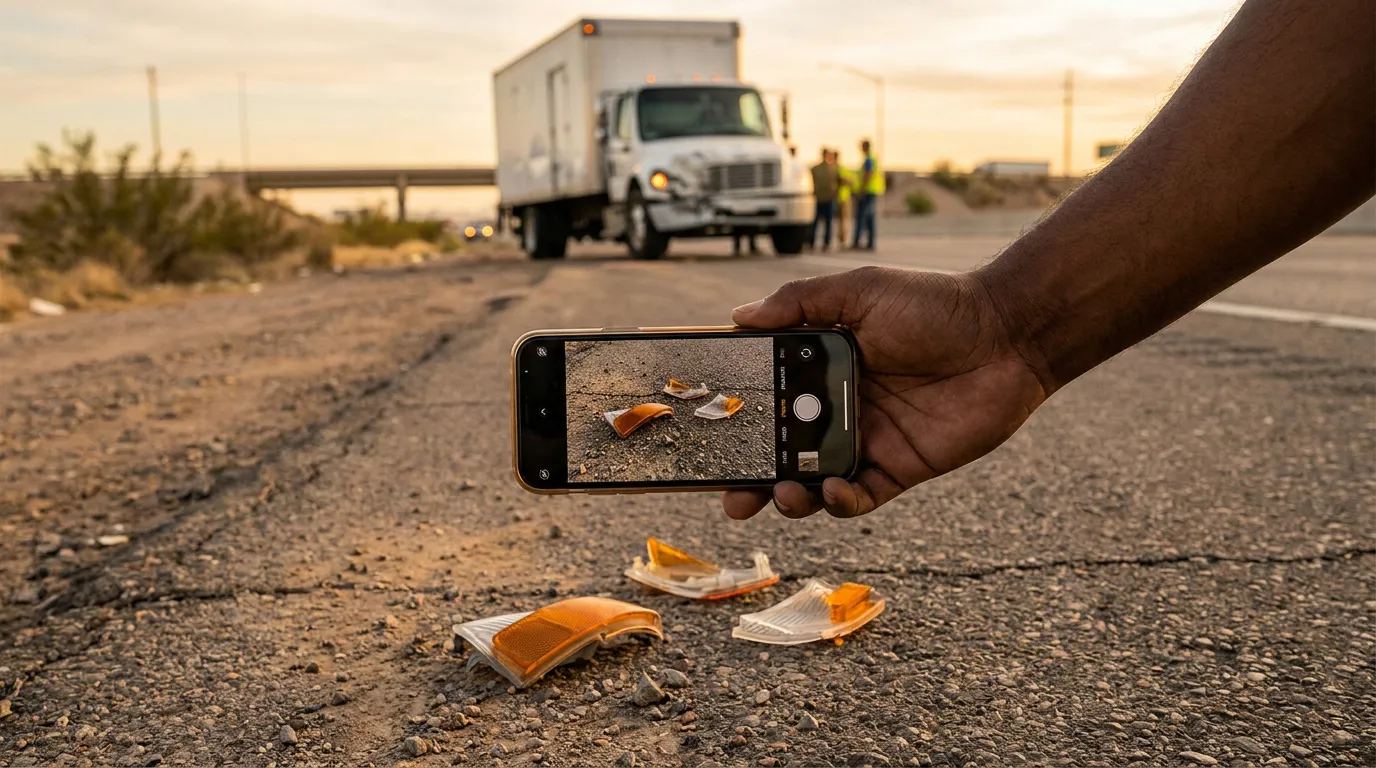
What Makes Truck Crash Cases Different in Texas
Texas has a separate set of rules for lawsuits over commercial truck crashes. Under Tex. Civ. Prac. & Rem. Code § 72.051(2), these rules apply when someone seeks damages for bodily injury or death from a collision and the defendant either drove the commercial motor vehicle or owned, leased, or controlled the truck or its driver. Because of that second category, an El Paso trucking company may, depending on the circumstances, be sued along with the driver. The company also holds much of the evidence.
Which Vehicles Count as Commercial Motor Vehicles
The statute defines "commercial motor vehicle" broadly. Under Tex. Civ. Prac. & Rem. Code § 72.051(4), (8), and (9), the term covers a motor vehicle used for commercial purposes in interstate or intrastate commerce to carry property or passengers, deliver goods, or provide services, and an attached trailer counts. That can cover semi-trucks, box trucks, and delivery vans on I-10, I-20, and local El Paso streets. A vehicle used for personal, family, or household purposes at the time of the collision is excluded.
Why the Two-Phase Trial Matters for Evidence
When the defendant asks for it, Texas courts must split a truck crash trial into two phases. Under Tex. Civ. Prac. & Rem. Code § 72.052, phase one decides liability and compensatory damages, and phase two decides liability for and the amount of exemplary (punitive) damages. Under § 72.052(e), together with § 72.054(b), if the employer stipulates that the driver was acting within the course and scope of employment, claims against the employer that require proof of the driver’s negligence, such as negligent entrustment, generally can go forward only in phase two, after the driver has been found negligent in phase one. You usually need the company’s hiring, training, and safety files to prove those claims, so they should be preserved early. You can read the full text of Texas commercial vehicle crash rules on the Texas Legislature’s website.
Sending a Spoliation Letter to a Trucking Company: What It Asks For
A spoliation letter is a written notice telling the trucking company to keep specific evidence related to the crash. It names the records, devices, and physical items that may matter and puts the carrier on notice that litigation is likely. The letter cannot guarantee that every record survives. Still, it can create a clear record that the company knew to keep the evidence. If evidence later goes missing, Texas courts may consider that notice in deciding whether to impose remedies such as a spoliation jury instruction. Those remedies are discretionary, and the most serious ones generally require proof of intentional destruction.
Driver-Related Records
Texas law lists specific driver-related evidence a party may present in phase one when the employer is a regulated motor carrier. Under Tex. Civ. Prac. & Rem. Code § 72.054(c)(1), this evidence includes whether the driver:
- Was licensed, disqualified, or under an out-of-service order
- Had a road-test certificate and was medically certified
- Was driving when federal hours-of-service or drug and alcohol rules prohibited it
- Was texting or using a handheld phone
- Had submitted an employment application or refused a drug test in the two years before the crash
Most of this information sits in trucking company records, including driver qualification files, hours-of-service logs, drug-testing records, and phone data. A well-drafted spoliation letter names these categories specifically. This list applies only where the employer is regulated by the Motor Carrier Safety Improvement Act of 1999 or Chapter 644 of the Texas Transportation Code, and the court must still find the evidence otherwise admissible.
Company-Level Records
Phase-one evidence can also cover the trucking company’s own conduct. Under Tex. Civ. Prac. & Rem. Code § 72.054(c)(2), this includes:
- Whether the company let the driver operate in violation of federal drug, alcohol, or hours-of-service rules
- Whether it followed required drug testing for a newly hired driver
- Whether it ran the required background checks on a driver hired within the past year
- Whether it was under an out-of-service order
Proving any of these generally depends on internal carrier files, which is why early preservation matters.
💡 Pro Tip: Keep a simple note with the truck’s company name, USDOT number (often printed on the cab door), trailer number, and any photos you took.
How the Police Crash Report Fits Into Truck Accident Evidence
The official record of a crash starts with the driver’s duty to report it. Under Tex. Transp. Code § 550.026(a), if a crash causes injury or death, or leaves a vehicle unable to be driven normally and safely, the driver must immediately report it to local police inside a city or otherwise to the sheriff’s office or nearest Department of Public Safety office.
Officers also have their own reporting duties. Under Tex. Transp. Code § 550.062, an officer who investigates a crash involving injury, death, or apparent property damage of $1,000 or more to any one person must file a crash report electronically not later than the 10th day after the date of the crash. This applies even when the officer investigates later by interviewing drivers or witnesses, which is one reason to get witness names quickly.
Crash report forms must collect detail on cause, conditions, people, and vehicles. Under Tex. Transp. Code § 550.064(b)(1) and (5), the form must also indicate whether a trailer was involved and whether the crash caused deaths. The report is often the first document reviewed, but it is only a starting point, the officer’s conclusions about fault are not binding on a court, and it does not replace the carrier’s internal records.
| Evidence Source | Who Holds It | Why Timing Matters |
|---|---|---|
| Police crash report | Law enforcement | Due within 10 days of the crash; may name witnesses |
| Driver logs and drug tests | Trucking company | Federal retention periods are limited; some records may be discarded within months |
| Hiring and safety files | Trucking company | Key for phase-two employer claims |
| Scene evidence and witness memory | Public / witnesses | Fades within days or weeks |
How Evidence Can Affect Fault and Compensation
Texas uses a modified comparative fault system, so evidence about who caused the crash carries real weight. Under Tex. Civ. Prac. & Rem. Code § 33.001, a claimant may not recover damages if his percentage of responsibility is greater than 50 percent. Trucking insurers sometimes argue that the injured driver shared the blame. Strong records may help push back on that argument.
When you are found partly at fault, your damages are generally reduced by your share of fault under Tex. Civ. Prac. & Rem. Code § 33.012(a). Skid marks, black box data, and witness statements can support a lower fault percentage for you. No amount of evidence guarantees a particular result. You can learn more about Texas proportionate responsibility from the Independent Insurance Agents of Texas.
💡 Pro Tip: Be careful about giving recorded statements to the trucking company’s insurer before you understand your rights.
The Two-Year Deadline and Why Evidence Work Starts Early
Texas generally requires personal injury lawsuits to be filed within two years. Under Tex. Civ. Prac. & Rem. Code § 16.003(a), a person must bring suit for personal injury not later than two years after the day the cause of action accrues. Wrongful death claims also generally carry a two-year deadline, measured from the date of death under § 16.003(b). Two years can sound like plenty of time, but building a truck case through witness statements, scene measurements, data downloads, and record requests can take months.
Exceptions to this deadline exist only in limited circumstances, such as certain claims by minors, and courts generally interpret them narrowly. Claims involving government entities may also have separate notice requirements, such as the six-month notice under the Texas Tort Claims Act or even shorter city charter deadlines. An El Paso truck accident lawyer can help clarify which deadlines may apply. You can also explore related topics in our truck accident evidence articles.
Frequently Asked Questions
1. What is a spoliation letter?
A spoliation letter is a written notice asking a party, such as a trucking company, to keep specific evidence connected to a crash. It typically lists driver logs, drug-testing records, qualification files, phone data, and electronic vehicle data.
2. Can I sue the trucking company and not just the driver?
In many cases, possibly. Tex. Civ. Prac. & Rem. Code § 72.051(2) applies Texas truck crash rules to defendants who owned, leased, or controlled the truck or its driver, but the statute does not create liability by itself. Liability depends on the facts, such as whether the driver was acting within the scope of employment or whether the company was itself negligent.
3. Is the police report enough to prove my case?
Generally, no. Under Tex. Transp. Code § 550.064(b), the report records cause, conditions, and whether a trailer was involved, but carrier records often hold the evidence of safety violations.
4. What if I was partly at fault?
Under Tex. Civ. Prac. & Rem. Code §§ 33.001 and 33.012, you may still be eligible to recover if your share of fault is 50 percent or less, though your damages are generally reduced by that percentage.
5. How long do I have to file a truck accident lawsuit in Texas?
Generally two years from the date the claim accrues under Tex. Civ. Prac. & Rem. Code § 16.003(a), subject to narrow exceptions. Government-related claims may have separate, shorter notice requirements.
Protecting What Your Case Depends On
Much of the evidence that shows how a truck crash happened belongs to the trucking company, and it does not stay available forever. Chapter 72 of the Civil Practice and Remedies Code lists driver and carrier records that may be admissible in phase one, from hours-of-service logs to background checks. Comparative fault rules and the two-year filing deadline make early preservation even more important. If you are researching your options, a spoliation letter trucking company lawyer can explain how preservation works in your situation.
When you are ready, we are here to listen and answer your questions plainly. Carter Law Wins works with El Paso and Las Cruces families facing serious truck crash injuries, in English or Spanish. You can reach out to our team or call 915-400-9467 to start a conversation.
Disclaimer: This content is for informational purposes only and is not legal advice. Every case is unique, and results may vary. Consult an attorney about your specific circumstances.